Purchase contract
Buying your own horse is in any case a big step that should be well thought out. Of course, you should think about every animal before buying it, but horses in particular place very special demands on the owner’s time, organizational skills and also wallet. In addition, buying a horse can be a tricky business.
Buying a horse, especially from private to private, is not a simple matter from a legal point of view. When buying a horse from a commercial breeder to a private person, there are also many things to consider. The most important key points concerning the purchase of a horse as well as the legal factors will be discussed in the following.
Pre-planning1. Awareness about the horse to be purchased:
1. awareness about the horse to be purchased:
- What criteria should the desired horse/pony meet? Age, suitability, level of training, size, sex, character traits.
- For whom is the horse intended? Amateur, professional, child, beginner, returning rider, therapy purposes
- What budget do I have available? Purchase price, purchase, accommodation, equipment, insurance, riding lessons, training
- A private seller as a vendor: often these horses are part of the family and knowledge of the strain is strong
- A commercial seller as a contractual partner
- Guarantee, warranty and liability better, legally secured
- With breeders a lot of history knowledge about horses available
- More professional advice likely
The (big) "try out
1. the search period
- Set yourself a time limit. (e.g. 6 months) If the period during which you search is too long, the individual impressions of the horses/ponies will evaporate and it will be difficult to compare them.
- Set a perimeter of the search. Set a perimeter for your search. Set up a tour to try out and compare several horses/ponies in the most optimized way possible.
- Clarify whether the horse/pony to be tried has third-party insurance or whether the seller is otherwise insured against accidents and personal injury. In most cases, you ride the foreign horse at your own risk.
- Many breeders now take a fee for trial riding, as a certain amount of riding tourism has set in. The fee should be charged when you buy the horse.
- At the first trial you should let the seller saddle, bridle and groom the horse. Watch during this process. At a repeated trial, prepare the horse yourself.
- Have the horse shown in motion before riding. (Pre-trotting, free running or lunging) Possible tact impurities, which you often do not feel as an inexperienced rider, can already be recognized here.
- Pay attention to whether the horse makes a tired impression and/or shows sweat stains when “saddling up”. Often, very “pithy” horses are already worked before the trial in order to present the customer with a particularly well-balanced horse. (Indication areas: between the hind legs, lower neck, saddle position).
- Arrange with the seller that after the trial, if there is interest in buying, a doping test will be done by a veterinarian within the next 5 days. This will prove that the horse was/is untreated with medication.
- Be sure to take a second, experienced person with you to give you feedback regarding the condition as well as the fit of the horse/pony.
- Make a video of the trial, this in the side picture (filmer on X) to be able to remember well the appointment, the horse and the side picture.
- Check the horse’s legs after the trial (are joints, hooves, neck or parts of the cervical spine unusually warm?)
- If you are interested in the horse, it is a good idea to have dinner/coffee together after the appointment.
Pre-purchase-exam and contract of sale
If the tried horse/pony is interesting for you, you should remember the following:
1. the pre-purchase examination
- Should there be a current purchase examination: Have the seller grant you the inspection rights and have the AKU inspected and assessed by the veterinarian you trust.
- If there is only a clinical examination (without x-rays), you can decide whether you want to have additional x-rays taken by a veterinarian and have them clearly assessed.
- Should no AKU exist younger than 2 months: At least a so-called small purchase examination should be made, even if the budget is tight!
- Decide whether you want to have a clinical AKU with or without x-rays.
- Order this after consultation with the breeder at a veterinarian of your choice and get the right to inspect them. This should be done within the first 10 days after the trial. Discuss this process at the trial appointment should the horse/pony be a candidate for you.
- If you decide for x-rays, 18 x-rays including findings are included in DE. Additionally you can have the back and the neck x-rayed.
2. the contract of sale
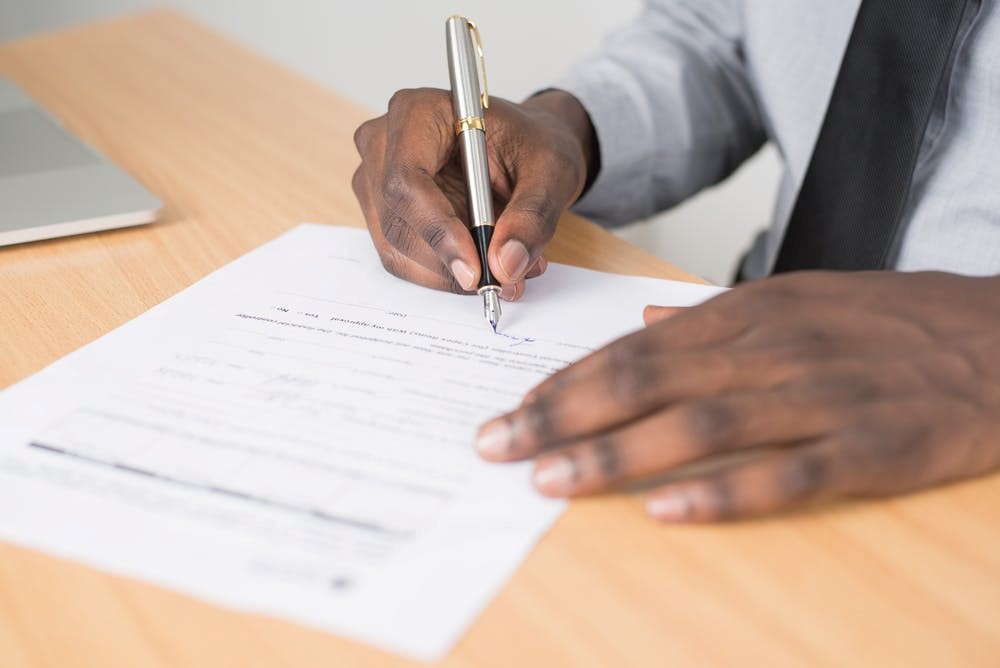
- Be sure to use an officially drawn up purchase contract, especially for private purchases and sales. It is recommended to create an individual contract. If you want to use sample contracts, you can find them with links in the Worth Knowing section.
- Since 1.7.2000 the equine passport is obligatory for every equine, that means for all horses, ponies and donkeys. And this applies without exception. Also the forest and meadow horse and the pensioner on the meadow needs a passport.
- Make sure that in the contract the made pre-purchase-exam is made to the “health condition” of the horse/pony at the time of the sale.
- If you buy a sport horse/pony, make sure that the description of the horse/pony includes the “sport condition” of the horse/pony at the time of sale.
- If the horse/pony is ridden, add to the contract what level of training and success the horse has.
- Specify the place of jurisdiction. Especially abroad, the legal regulations often vary. It is advisable to set the place of jurisdiction to your own county or state.
- For breeders in Germany this is not so relevant, because German law is applied.
- Set in the contract that the “risk of accidental loss and deterioration of the contract goods” is regulated in such a way that this passes to the buyer when the horse/pony passes into his possession (full payment and handing over of the title deed). Should the horse/pony be in the breeder’s keeping for further training/rearing, the new owner bears the risk.
- List reciprocally in the contract who corresponds to which legal title. (private or commercial)
- Enter the life number and chip number of the horse/pony in the KV.
- Be sure to list the horse’s known “previous illnesses or injuries” by the seller.
Once the purchase is completed, the following is important:
1. the transport.
- Hire a commercial horse transporter, they are insured against accidents and are liable for any damage to the horse. If you pick up the horse/pony yourself, you assume the risk from the time the horse/pony is handed over at the pick-up location.
- Have the seller draw up a handover protocol to be handed over to the transporter, in which the transporter lists the intactness of the horse and/or any existing, external defects on the horse prior to transport. This inspection will be carried out on the spot if the horse is picked up by the buyer.
- Check your new charge for injuries caused by the transport and let the horse run and move briefly to get the muscles “going” again and to rule out lameness.
- Caution: When selling from trade to trade, defects in the “good” must be disclosed immediately in order to maintain a warranty or guarantee.
- Prior to the pick-up date, set up a 4-week training plan with the seller that corresponds to the horse/pony’s previous training.
- Have a feed schedule given to you. If you feed other feed in your barn, have a portion of feed given to you. Furthermore, it is important to get the plan for the farrier including special instructions.
- Try to continue in riding, saddling and handling the horse/pony – should it have been species appropriate and adequate.
- Avoid frequent changes of rider, this stresses young horses in particular. Allow your new horse/pony some time to get used to the new stable.
Things to know
Pre-Purchase examinations:
- The veterinarian is responsible for the correctness of medical examinations. Make sure that on the x-rays, at least name and chip number are written. Check these for correctness.
- The most important thing in this regard is an unambiguous, complete report on paper including the signature of the doctor concerned.
- If you have any concerns about a report, consult a second opinion. It should be noted that not all medical professionals are authorized to perform AKUs.
- For this, the problem arises that one has to adhere to the current X-ray catalog, but each veterinarian has his own opinion, which makes the assessment of the risk quite subjective.
- For x-rays the following are useful: o 4x toe lateral, 2x carpus 135°, 2x carpus 0°, 2x tarsus lateral, 2x tarsus 0° 2x cervical spine (starting atlas), 2x saddle position (starting middle WR), 2x articulatius genus 90°, 2x oxspring, 2x toe caudal
- Clinical PPE (bending, chip reading, listening to heart and lungs under load with binders to exclude a breath murmur, external aspection) In case of heart murmurs, further diagnostics via Doppler ultrasound is recommended.
- PPEs must be listed in the contract as a health condition of the horse/pony to be valid.
- Gastroscopy in case of suspected gastric ulceration or irritation.
Legal realities of discrepancies.
Duty of proof:
- In sales from trade to private, the seller in Germany is 6 months in case of defects in the burden of proof. This means that the seller has to prove, e.g. by medical certificates, that the existing defect did not exist before the sale. In case of defects in rideability, i.e. likewise the suitability of the horse as a sport partner in terms of behavior and mannerisms, this also applies. In the case of sales from private to private, the burden of proof is transferred to the buyer upon conclusion of the contract. This is due to the fact that an end consumer cannot be expected to have the expertise to fully assess a horse.
- In sales from trade to trade, the “good-receiver” must point out defects immediately after the horse arrives. This can be guaranteed e.g. by an PPE immediately after arrival.
- In the case of sales from private to business, the seller does not have the burden of proof. This for the above reason in view of the expected expertise.
- This term refers to the place of the competent court for any disputes that may arise between the contracting parties:
- In addition it comes that likewise the legal regulations apply, which find application there. e.g. the above-described proof obligation regulations vary world-wide very strongly. Also in some federal states in Germany there are not court appointed and sworn experts for all specialties in the equine field, who are consulted by the courts. This is therefore definitely a “safeguarding” point.
Model contracts:
Many form sales contracts on the market suffer from deficiencies. For example, if the liability limitation agreements do not expressly exclude claims for compensation for bodily injury and damage to health or for gross negligence, the clauses are invalid. Consequently, every horse seller should carefully check a form sales contract before using it to see whether the contract he has selected also stands up to the legal content control. Only then should he use it, since otherwise he is legally no better off than with a contract by handshake. This applies irrespective of whether the seller is an entrepreneur or a consumer, because form sales contracts are equally subject to content control.
From private:
- St.Georg: https://www.st-georg.de/content/uploads/2017/09/st_georg_vertrag_kauf_privat.pdf
- FN Download: https://www.pferd-aktuell.de/shop/pferdekaufvertrag-download.html
- Jürgens & Mertens, Rechtsanwälte: https://cdn.website-editor.net/5d07724c43d74bc8b1a3bcb1a19f27b0/files/uploaded/Kaufvertrag%2520Pferd%2520Privat-Privat.pdf
- https://www.st-georg.de/content/uploads/2017/09/st_georg_vertrag_kauf.pdf
- KV-Aachen: https://kv-aachen.de/wp-content/uploads/2013/02/Pferdkaufvertragsmuster.pdf
- Jürgens & Mertens, Rechtsanwälte: https://cdn.website-editor.net/5d07724c43d74bc8b1a3bcb1a19f27b0/files/uploaded/Kaufvertrag%2520Pferd%2520Unternehmer%2520-Privat.pdf
- Kanzlei Madsen, Nolte & Kollegen www.pferd-versichert.de: https://www.pferd-versichert.de/fileadmin/Vordrucke/Pferdekaufvertrag_zwischen_Privatpersonen.pdf


